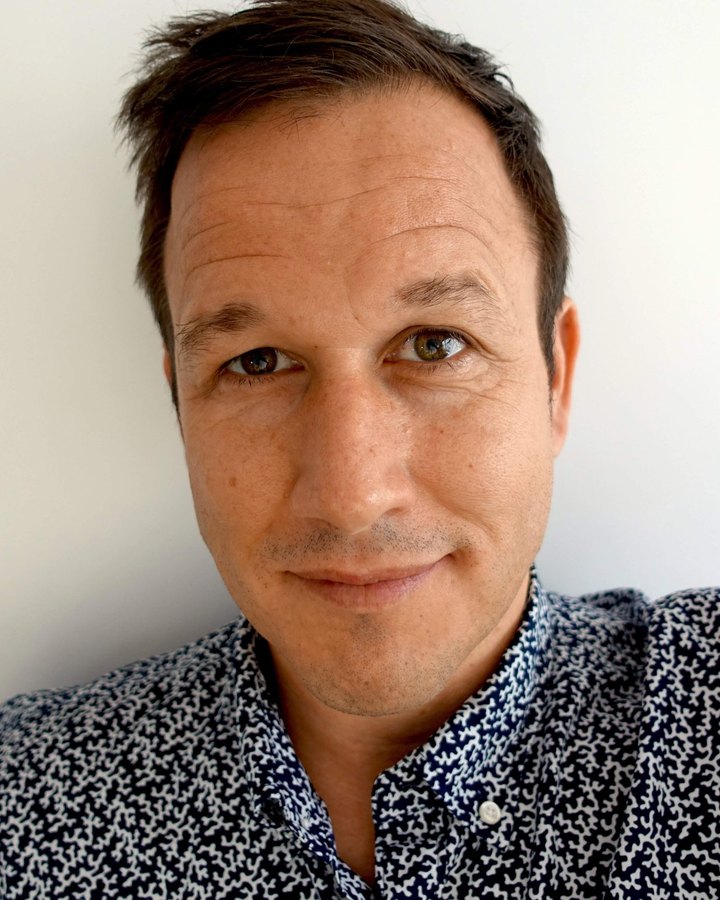
 Billy BicketProgram designer and coach · pilots to scaleFormer Vice President, Maker Labs at TechSoup
“Before the next round, what is the last one still doing?”
Programs that keep running after the grant ends. I help foundations and intermediaries decide what AI support to fund next, and I design peer cohorts that grantee leaders go on to run themselves.
For foundations, corporate social impact teams, and the networks and intermediaries who carry programs into communities. Leading a program inside a company? Start here →
Thirty minutes on Google Meet. If I can help, you’ll have a written proposal with options within two working days. If not, I’ll point you to someone who can.
Sound familiar?
- “Our grantees finished the AI training. How do we make it last?”
- “We want a cohort or challenge that outlasts the grant.”
- “Our network wants to run this for members without adding staff.”
The cohort finishes, the reports look good, and the next round is due. The question then is what people are still doing, and who carries it once your grant ends.
Hello, I’m Billy Bicket.
I design programs and coach the people who run them, so the work keeps going after I leave.
I do my best work in the room with the people who will run the program: listening for what they already know, then shaping something they can see themselves in and carry on their own.
When the Filecoin Foundation for the Decentralized Web renewed our first grant, we used it to go deep instead of wide. 181 teams applied for the Cultural Memory Lab. We chose four, and all four finished their archives.
teams chosen from 181 applications finished their archives. Cultural Memory Lab at TechSoup, with Gray Area.
meetups, run by 1,353 local volunteers. Net Tuesdays at TechSoup.
Mindful Schools’ approximate annual revenue while I was Director of Growth.
- Microsoft
- USAID
- U.S. State Department
- SAP
- Cisco
- Yahoo
- UC Berkeley Human Rights Center
- Filecoin Foundation for the Decentralized Web
People keep going when someone notices, someone has done it before and someone asks.
What keeps people working together once the thing that started it is gone? Four lessons from programs that lasted. Each shapes how I design.
The expert brings the knowledge. The coordinator brings the people back.
Whether anyone finishes depends on the person who notices on Wednesday that a group has gone quiet.
The best guide is often the person who solved it six months ago.
In the Cultural Memory Lab, the most useful help came from peers sharing a metadata workaround or a board memo.
Choosing fewer people is the first act of care.
We chose four teams from 181 applications, looking for a real problem, a person to own it and time set aside to work on it.
A date and someone who asks do more than another training.
The teams that finished named one small step and had someone ask about it the next day.
“The part that’s special is the way Billy can open a process to a community of people, listen openly and honestly to their ideas… and then build a project in which people can see themselves.”
Marnie Webb · CEO, TechSoup“Billy’s leadership and thoughtful design of the TechSoup–FFDW Cultural Memory Lab went well beyond our public events… he reported progress with transparency and integrity… Anyone bringing emerging technology to new audiences… should talk to him.”
Kaitlin Donovan · Senior Program Manager, Social Impact, Filecoin Foundation and Filecoin Foundation for the Decentralized Web“Billy is a tireless and relentlessly positive ‘can do’ person who brings diverse groups of people together… Billy gets things done.”
Chad Dickerson · Executive coach, former CTO and CEOFrom recommendations.
What your next round gets.
The next round starts ahead
You fund the next step, not a relaunch. What’s already running becomes the base.
Reach grows. Staff costs don’t.
Grantees and members who learned it teach the next group.
Evidence your board can use
You report what people now do differently, not just who showed up.
It doesn’t depend on me
The people closest to the work run it, so it doesn’t hinge on a consultant or one busy champion.
We agree on the result before we agree on a fee.
Before any work starts, we answer two questions together: what should be different when we’re done, and how will we know? You choose the measures, such as how many grantees use the new tool, who runs the program day to day and how many people finish.
Most funders start with a funding decision. The other three services are for programs ready to grow. Scope and fee are fixed before we start.
Funding decision.
Before you approve the next round of AI support, decide what to fund, for whom and what it will take to keep using it.
You get: a written recommendation on what to keep, change or stop, who owns it and what it costs to run, with the evidence and disagreements behind it. Your leadership makes the call.
How: four weeks. I talk with the people who use it, including those who stopped. When it helps, I bring them together with the people who pay for it at one working table: first names only, nothing written up without consent.
I make sure the table includes people who pay for it, run it, use it, stopped using it and have done it before.
I don’t review a program I helped build, or bid on the work my review recommends.
Program design.
Turn a promising idea into a program your team can run.
You get: a blueprint your team or delivery partner can follow: who it’s for, how people join, what happens when they meet and who does what. If it needs funding, I co-write the proposal.
How: we design it with the people who will run it and take part in it.
Peer cohort.
Help each grantee leave with one AI practice they have tested and own.
You get: a six-week cohort, one tested practice and a named owner per organization, and people ready to teach the next group.
How: small groups on their own real tasks, learning from peers who solved the same problem recently, with someone checking in between sessions.
Coaching for the program lead.
Give the person running it someone in their corner.
You get: regular sessions, for an agreed period, with someone who has run programs like this.
How: they make the calls. I bring what I’ve seen work elsewhere.
Programs I helped design, and what lasted.
A small cohort, backed all the way to a finished archive.
Maker Labs ran funded cohorts for organizations adopting and responsibly integrating new technology, including AI. I wrote the proposal with Marnie Webb and designed the cohort model with our cohort lead. The Filecoin Foundation for the Decentralized Web funded it and renewed the first grant, which we used to go deep with a small cohort. Gray Area designed the learning experience, and the four teams, chosen from 181 applications, built the archives. What lasted: four finished archives on decentralized storage.
Grew from about $1M to $4M in annual revenue while I was Director of Growth.
Mindful Schools trains educators to bring mindfulness into classrooms. I worked on its reach through social media and community engagement, alongside its founders, staff and the teachers who passed the practice on. What lasted: teachers who went on to train other teachers.
Over the years, 1,353 volunteers hosted 7,581 meetups.
Net Tuesdays was a network of local meetups run by volunteer organizers. With colleagues, I designed it, worked with local leaders to launch it in Portland, DC and New York, then handed it to a community leader who built it out. What lasted: volunteers ran it for years, later as TechSoup Connect.
$100,000 a year in prizes for projects putting new web tools to work.
I co-founded NetSquared with Daniel Ben-Horin and Marnie Webb, designed the challenges’ user experience and, with Marnie, helped secure sponsorship from SAP, Google, Microsoft, Cisco, Yahoo, USAID and UC Berkeley’s Human Rights Center. With TechSoup’s Romanian partner, I co-designed Restart Romania, a local version sponsored by the U.S. State Department.
How each program was designed, with drawings →
Our NetSquared work at TechSoup was recognized by the White House Office of Social Innovation. Invited speaker at SXSW.
- A Q&A with Billy Bicket on the Cultural Memory LabFilecoin Foundation for the Decentralized Web
- Preserving Black queer history through decentralized community archivingTechSoup
More about me.
Most recently I led Maker Labs at TechSoup, which ran funded cohorts for organizations adopting and responsibly integrating new technology, including AI. Before that I was Director of Growth at Mindful Schools while its training spread from teacher to teacher. Earlier I co-founded NetSquared, a TechSoup project, with Daniel Ben-Horin and Marnie Webb and, as TechSoup’s VP of Platform and Community, led a team of fifteen across San Francisco, London and Warsaw. I started in New York on Meetup’s early team, working with café and bookshop owners on how strangers could meet in their spaces.
Alongside those roles I advised other organizations through my practice, Nicely Goods. It is now my full-time work.
I also study how AI spreads through organizations and how to keep its gains while reducing its harms. I write about what I’m learning in occasional letters.
Home has been the US, Singapore, India and Greece. I’ve crossed about thirty countries by bicycle, once alone for a hundred days across Southeast Asia.
Plan your next round on what’s still running.
Tell me what you’re funding and what you need to decide. I take a few clients at a time and work with each one myself.
- To invite me to speak at a conference or team offsite, write to billy@billybicket.org.
- Not ready to talk? Get occasional letters from the work →